

Learning to read with the Montessori method

Learning to read is a crucial stage in a child's development, and Montessori education offers a unique and effective approach to teaching this fundamental skill. Founded by Maria Montessori in the early 20th century, this educational method is based on specific pedagogical principles and uses carefully designed teaching materials.
1. Montessori Materials for Learning to Read
- Rough Letters: Children in a Montessori classroom begin by exploring letters through a tactile medium. Rough letters are made of wood or cardboard and covered with sand or emery cloth, allowing children to trace the letters with their fingertips. This sensory approach promotes a direct association between the shape of the letter and its sound.
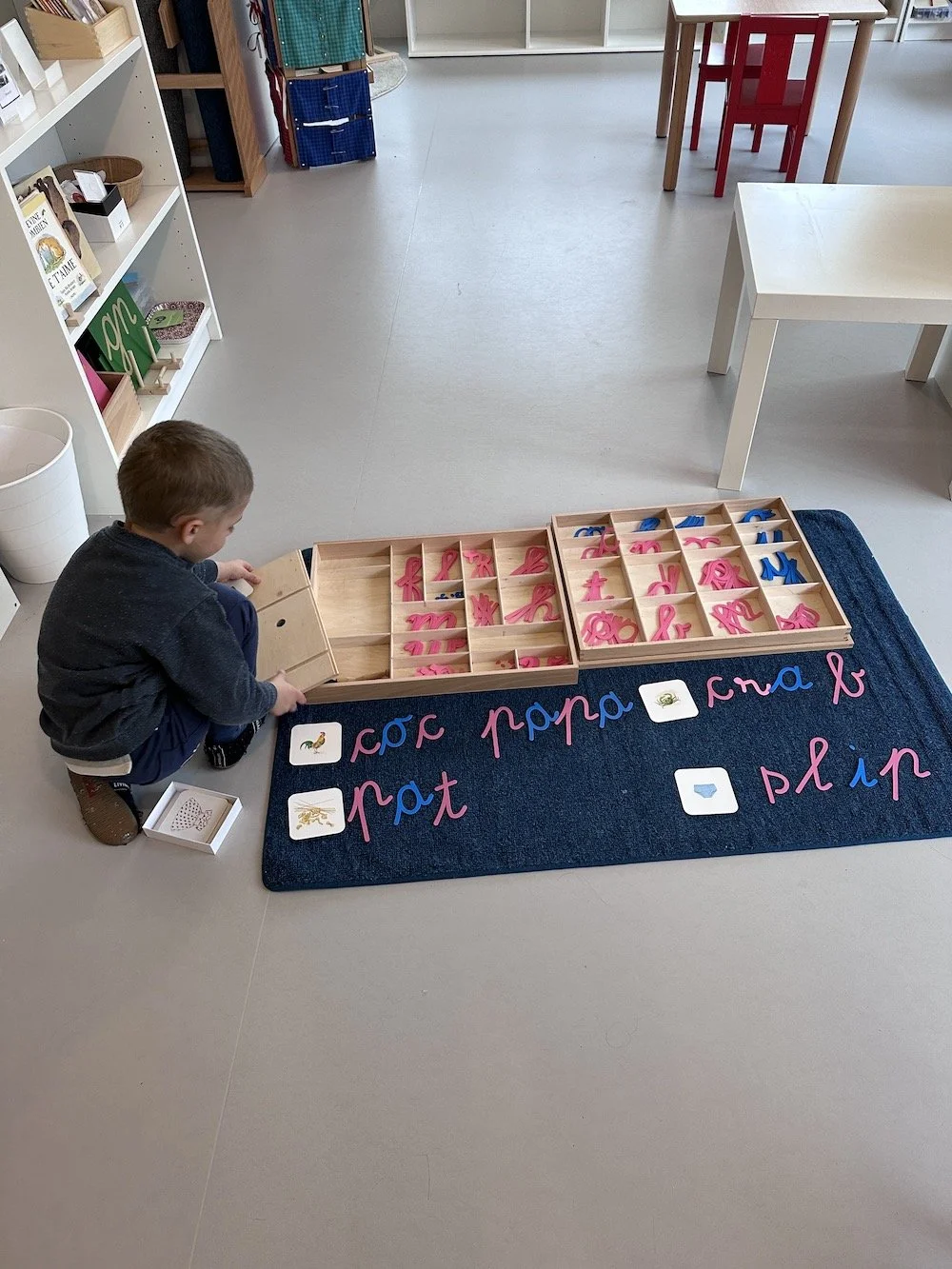
- The Mobile Alphabet: To develop word comprehension, children use movable letters. These allow children to create words and short sentences. This activity encourages visual recognition and phonetic blending.
- Classified Cards: Reading is often introduced through the association of images and words. Montessori children use themed classified cards to enrich their vocabulary and reinforce the relationship between written symbols and the real world.
- The game "My Little Eye" helps develop children's phonological awareness by allowing them to identify the sounds that make up each word.
2. Montessori Teaching Principles for Learning to Read
- Autonomy and Initiative: Montessori pedagogy emphasizes children's autonomy. In the context of learning to read, this translates into individual choice of activities. Children are free to choose the materials they want to work with, which encourages their initiative and intrinsic interest in reading.
- Progressive Development: Montessori activities for learning to read are designed to follow the natural development of the child. Children begin by exploring letters in a tactile way before progressing to more complex activities, such as building words and reading sentences. This progressive approach ensures that each step is well integrated before moving on to the next.
- Use of Sensory Materials: Montessori pedagogy places great importance on the use of sensory materials. By using concrete objects (rough letters) and engaging multiple senses, children develop a deeper and more lasting understanding of abstract concepts related to reading.
- Individualized Education: Every child progresses at their own pace, and Montessori pedagogy recognizes this diversity. Montessori teachers are trained to carefully observe each child's needs and adjust their teaching accordingly. This allows for personalized learning that takes individual differences into account.
3. Age Appropriateness for Children
The Montessori approach to learning to read is perfectly suited to children aged 3 to 6, a crucial period for language and cognitive development. At this age, children have a particular sensitivity to absorbing language, and Montessori pedagogy capitalizes on this sensitive period to build a solid foundation in reading.
Montessori education adapts to the different stages of development of children aged 3 to 6.
- Early reading (ages 3–4): Young children begin with rough letters and classified cards. The focus is on recognizing basic sounds and expanding vocabulary.
- Phonics and Simple Sentences (ages 4-5): As children master the basics, they progress to reading cards and phonics books. The goal is to associate sounds with letters and form simple words.
- Comprehensive reading and comprehension (ages 5-6): Children begin to read more complex books and develop a deeper understanding of the content. The focus is on reading fluency and comprehension.

Solid Foundations for Life
The Montessori approach to learning to read creates a solid foundation for children's intellectual development. By incorporating interactive materials, educational principles, and careful adaptation to children's ages, this method shapes competent and passionate readers. By providing an environment that encourages children's natural curiosity and respects their individual pace, Montessori education offers an innovative and effective approach to learning to read. Learning to read thus becomes an exciting adventure, preparing children not only for their future academic studies but also for life.