Forest school
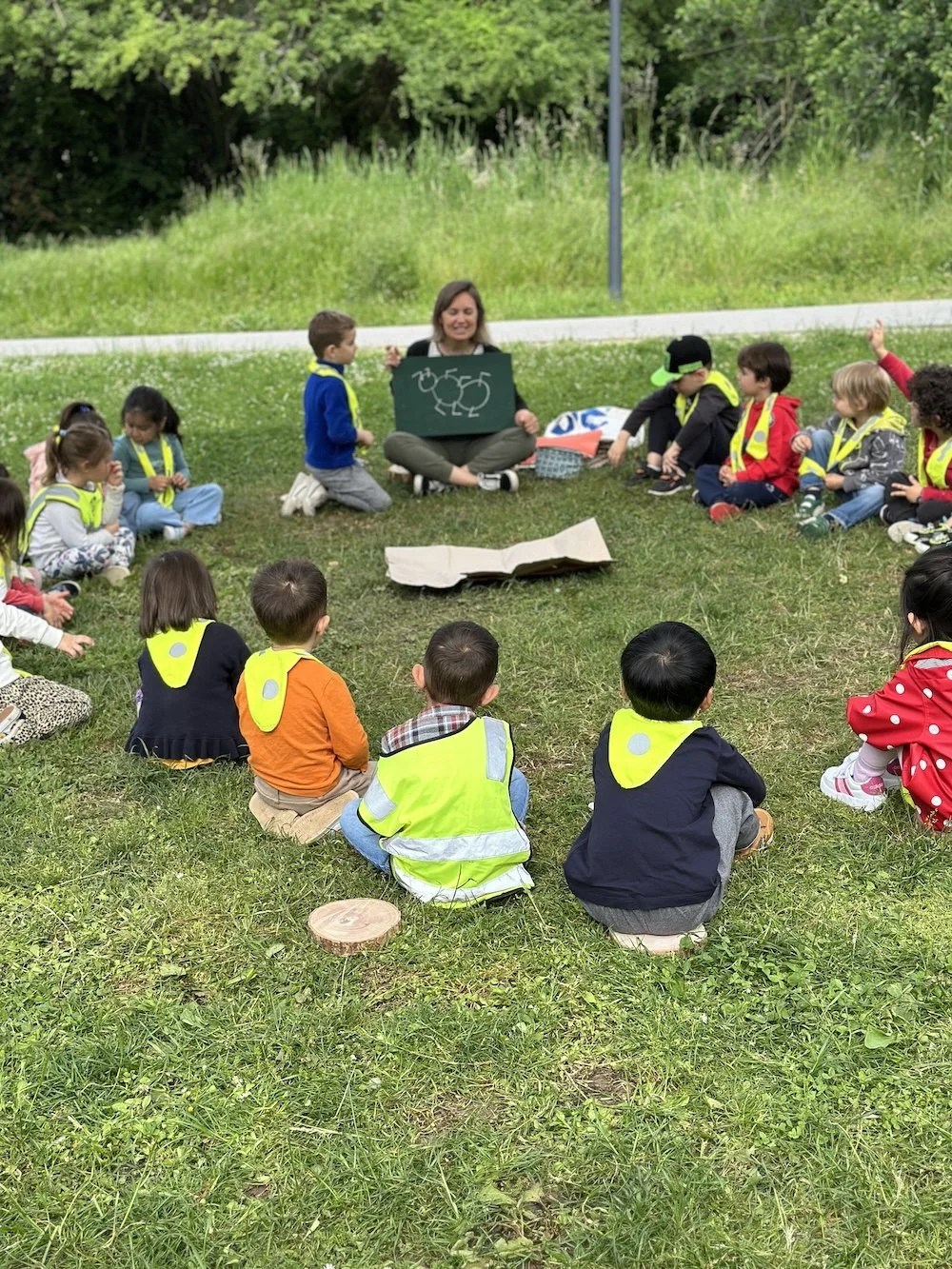
Forest school is an educational approach that takes advantage of the natural environment to promote children's learning and development.
This method emphasizes outdoor education, where children spend most of their school time exploring, playing, and learning in the woods or other natural spaces.
Forest school aims to encourage children's curiosity, independence, and self-confidence through hands-on, sensory activities such as building huts, observing wildlife, and crafting with natural materials. It also promotes the development of social and emotional skills, as well as respect for the environment, by allowing children to interact freely with nature and immerse themselves in dynamic and engaging learning experiences.
Jacques Prévert
“Trees speak tree as children speak child.
When a child of woman and man speaks to a tree
The tree answers, the child hears.”
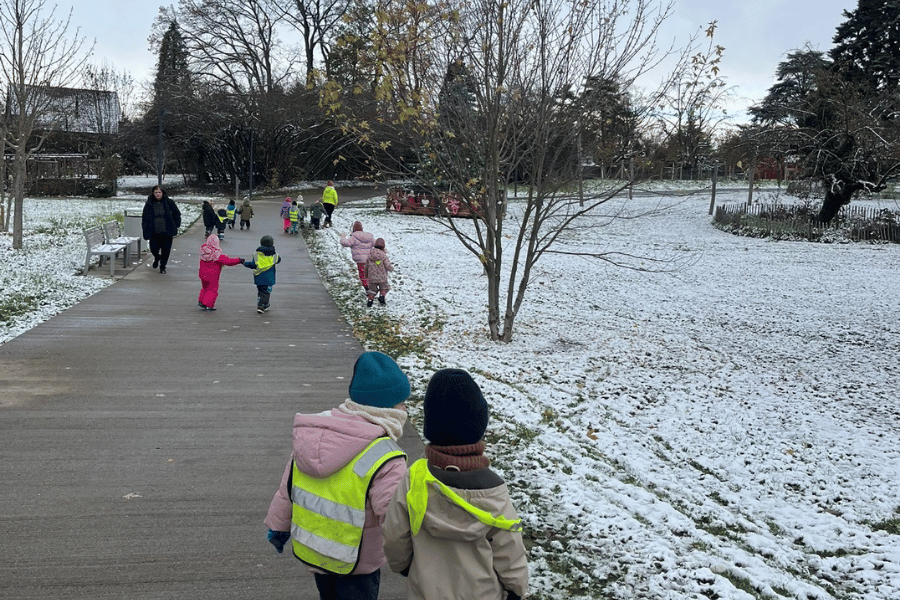
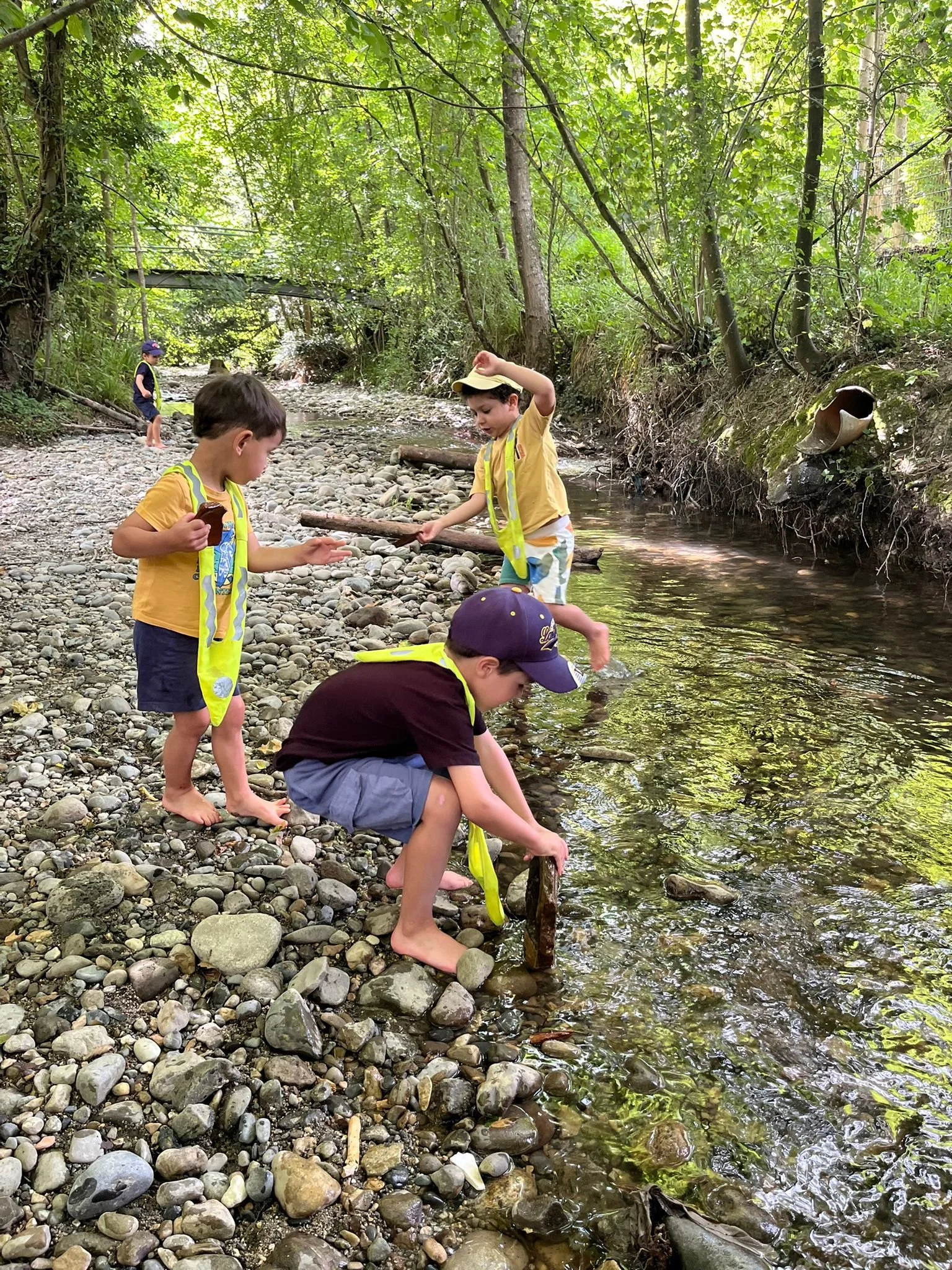
At Montessori Happy Kids, the forest school approach is integrated into the educational program once a week, offering children an immersive outdoor experience. Each week, students spend a morning in the surrounding nature (in the forest, by the Drize River, near the Bistoquette pond, etc.) where they participate in various educational and exploratory activities related to nature.
Under the supervision of educators trained in the Montessori method and forest school principles, children are encouraged to explore their natural environment independently while respecting safety rules.

In line with Montessori pedagogy, forest activities are designed to be self-directed, promoting independence, self-confidence, and children's natural curiosity.
Educators act as observers and guides, stepping in to facilitate learning when necessary, but allowing children to lead their own discoveries.
This holistic approach aims not only to enrich children's academic knowledge, but also to promote their emotional and physical well-being by providing them with a space to connect with nature and with each other in meaningful ways.
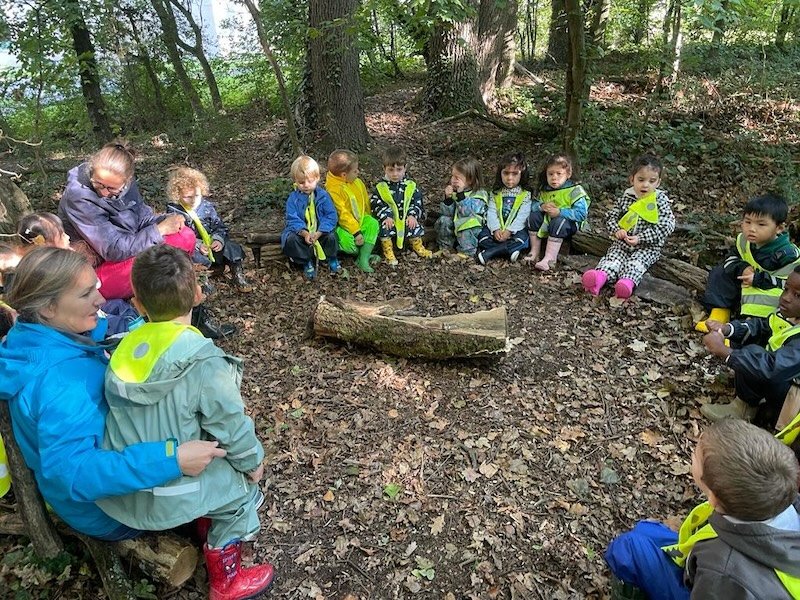
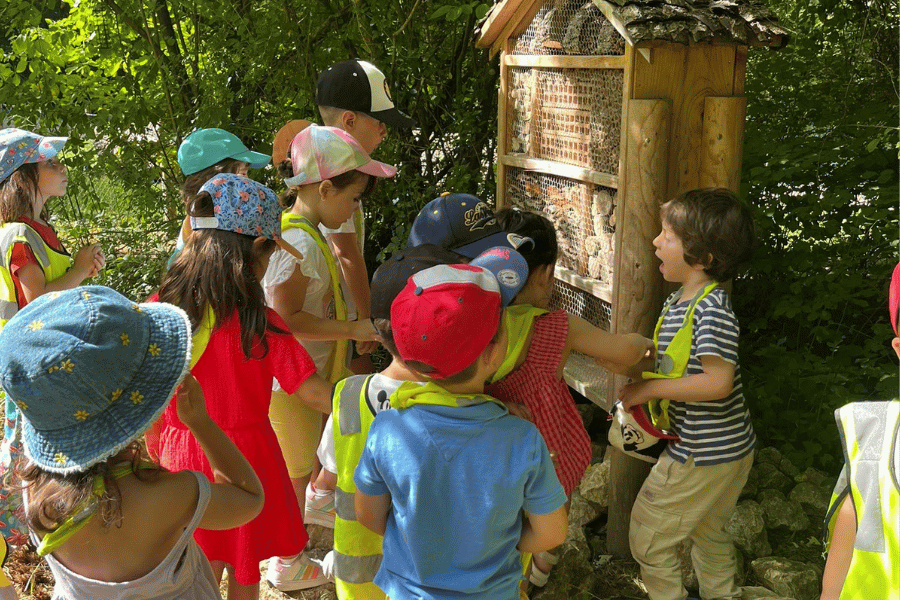
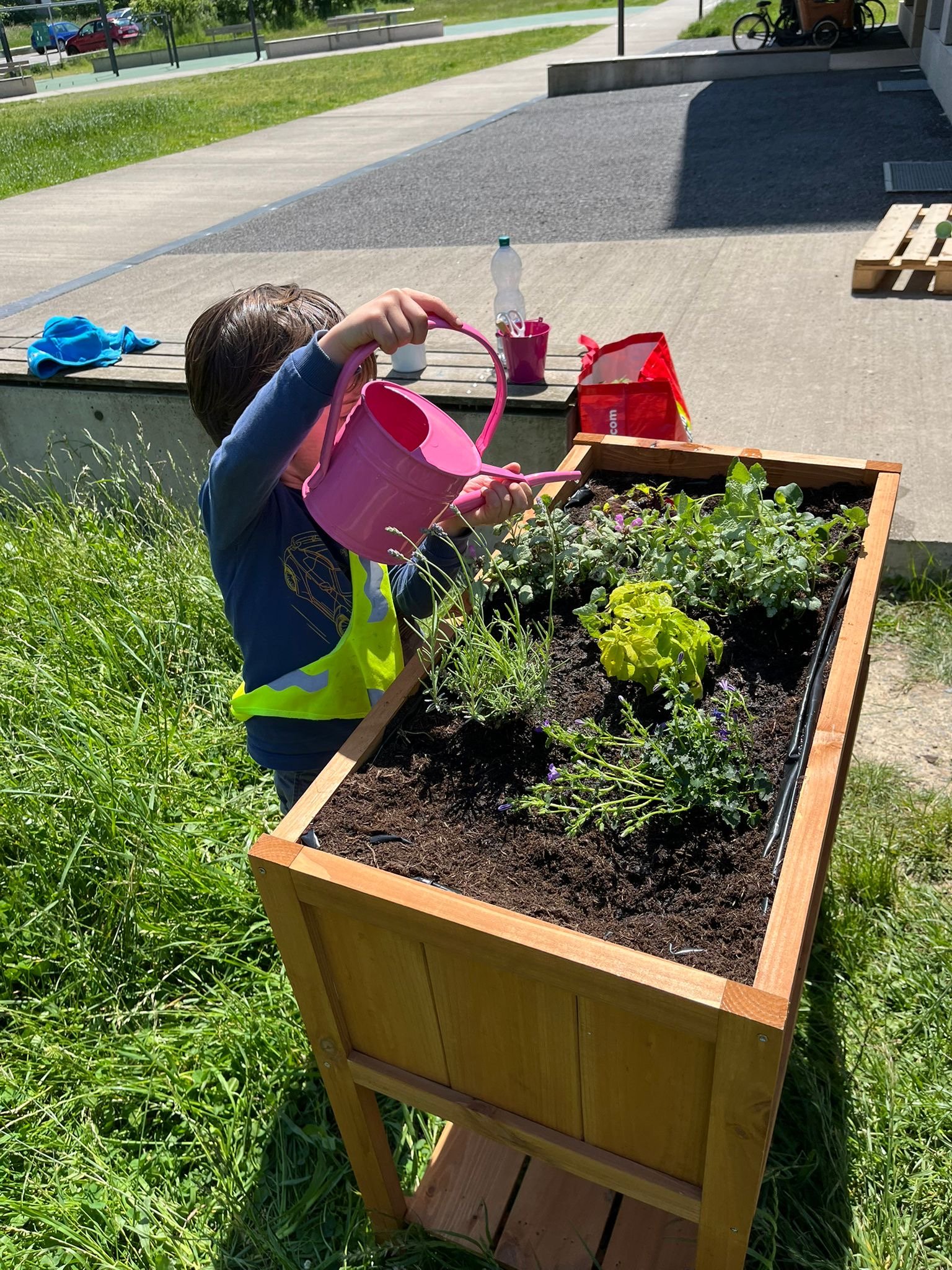
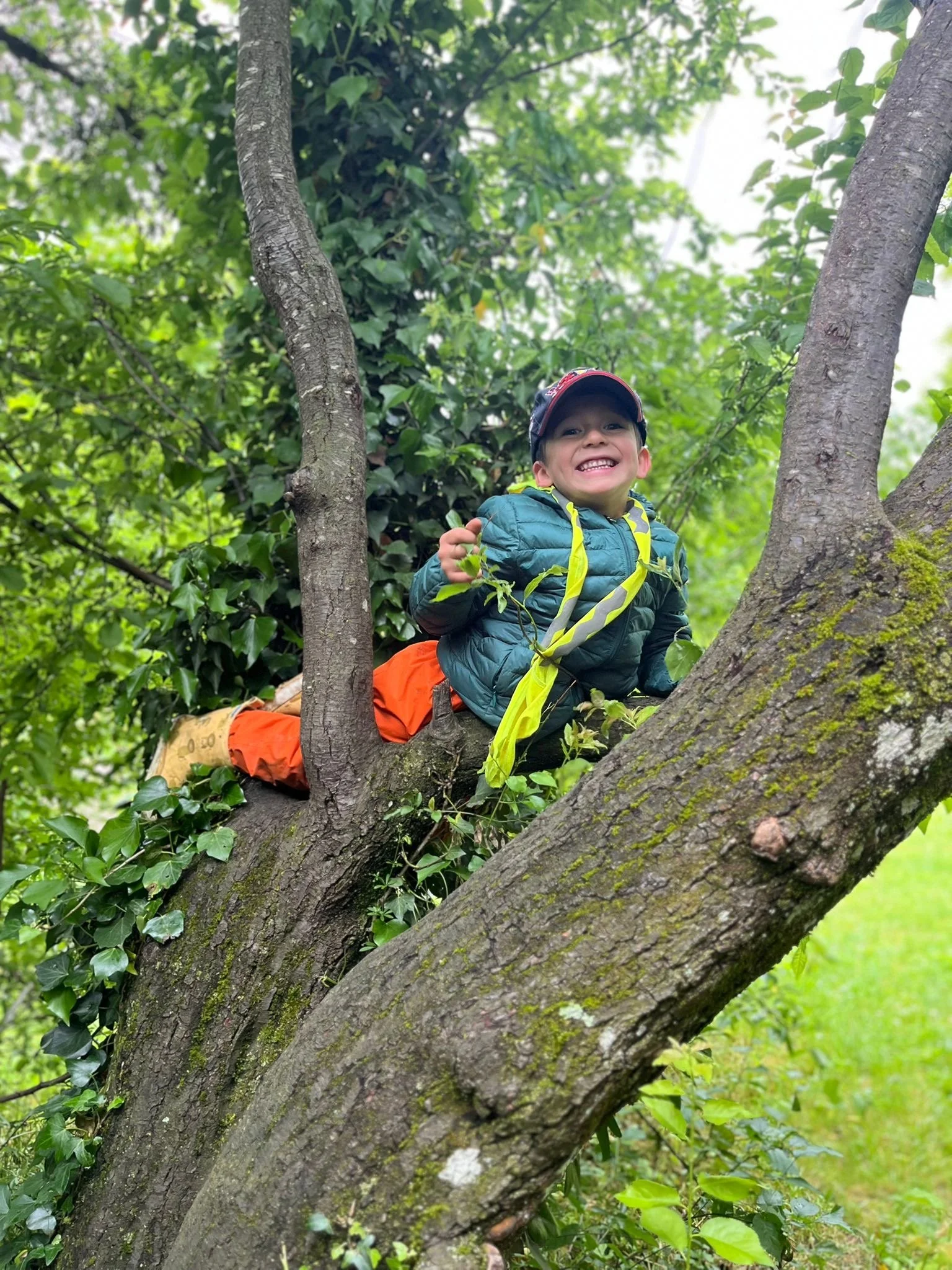
Activities include building cabins, collecting and identifying plants, observing insects and birds, and learning about nature's cycles.
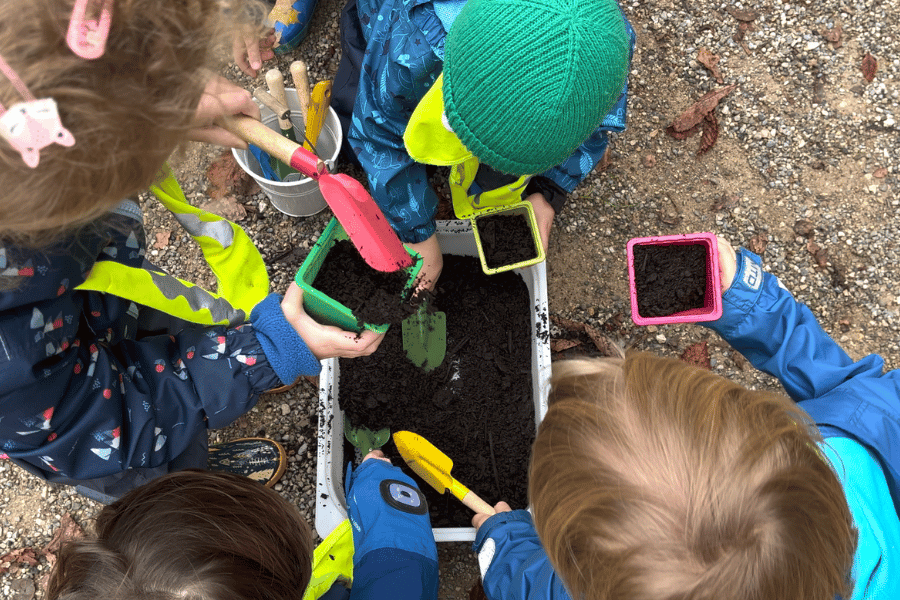
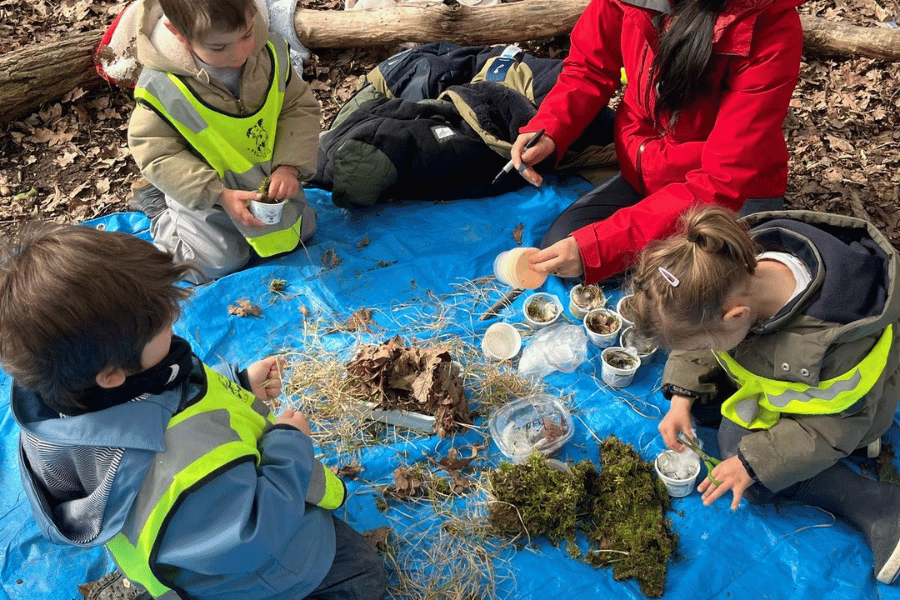
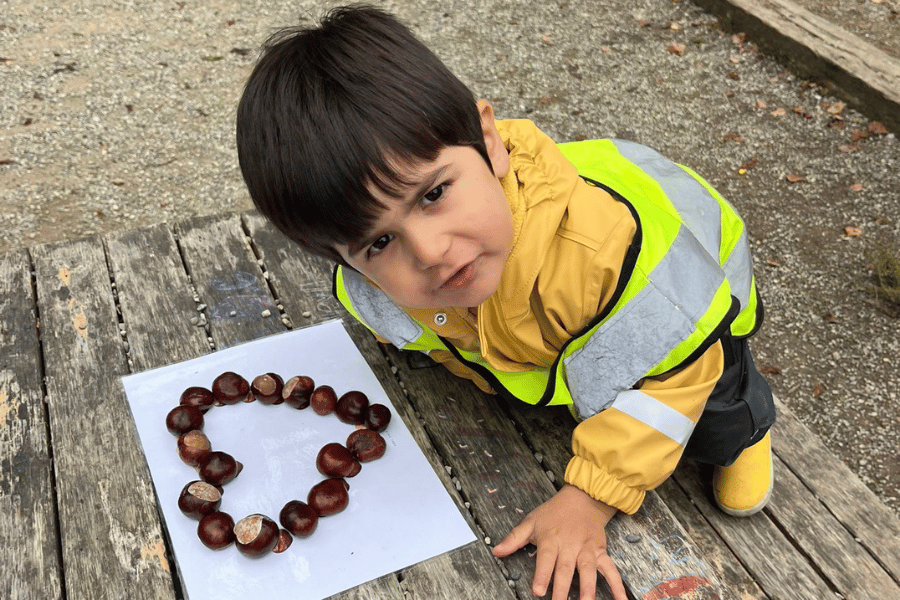
Children also learn to use simple tools for creative projects, such as crafting with natural materials or creating artwork with items found on site.
These mornings in the forest allow students to develop practical and manual skills while strengthening their connection with nature.