


The Montessori method is much more than just an educational approach; it is a way of life, a philosophy, and a worldview that places the child at the center of their own learning. Developed by Maria Montessori in the early 20th century, this revolutionary method has transformed the way we think about early childhood education. Today, numerous studies highlight the many benefits that the Montessori method offers preschoolers, which explains why it is increasingly popular with parents and educators around the world.
1. Encouraging independence and self-discipline
One of the most fundamental aspects of the Montessori method is its commitment to child autonomy. In a Montessori environment, children are encouraged to make independent choices about their activities and schedules. This promotes the development of self-discipline, responsibility, and self-confidence from an early age.
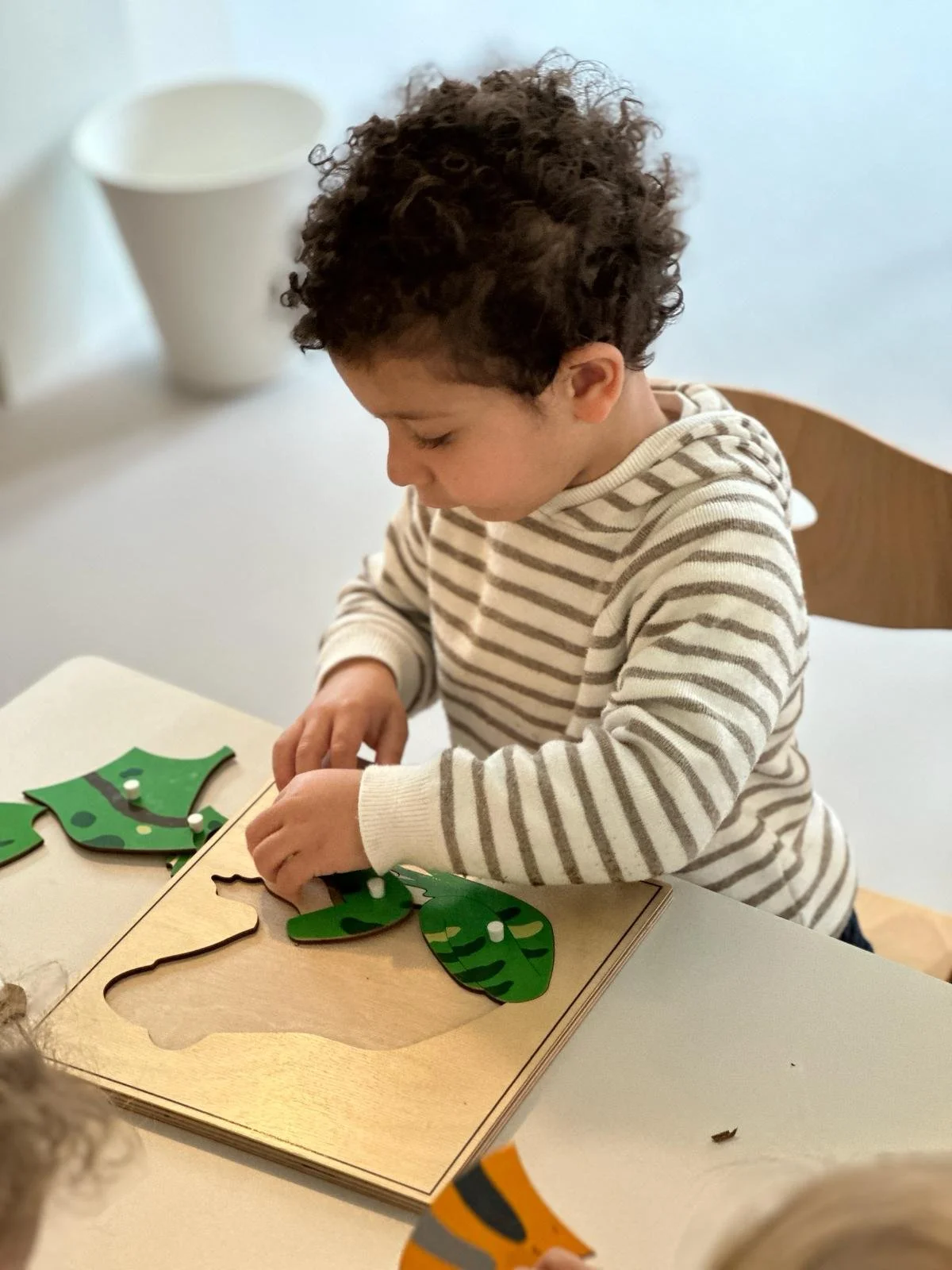
Concentration
Learning to concentrate, to see tasks through to completion, to persevere, and to overcome difficulties: these are the skills that children develop in a Montessori classroom.
2. Individualization of learning
Every child is unique, with their own interests, talents, and learning rhythms. The Montessori method recognizes this diversity and offers an individualized program that adapts to each child's needs. Montessori teachers carefully observe each child and provide them with activities and materials that match their interests and level of development, allowing each child to progress at their own pace.
3. Development of independence and practical skills
The Montessori method places a strong emphasis on developing independence in children. Practical activities, such as pouring, dressing, cooking, and cleaning, are an integral part of the Montessori program and help children acquire essential life skills. By learning to do things for themselves, children develop a sense of pride, competence, and responsibility.

Practical life activities
Every day, children engage in everyday activities that help them develop their concentration, fine motor skills, perseverance, and planning abilities.
4. Sensory approach to learning
Young children learn best through their senses. The Montessori method uses a sensory approach to learning, providing children with a variety of sensory materials that stimulate their senses and curiosity. These sensory activities help children develop their cognitive skills, concentration, motor coordination, and understanding of the world around them.
5. Respect for children and their overall development
In a Montessori classroom, children are respected as individuals and their overall development is taken into account. Montessori teachers are trained to observe and understand each child's physical, emotional, social, and intellectual needs, and to guide them in their development in a caring manner. This creates a safe, positive, and stimulating learning environment where children feel valued, supported, and encouraged to explore and discover the world around them.
The Montessori method offers a holistic approach to education that emphasizes the child's overall development, independence, creativity, and love of learning. By choosing a Montessori school for their preschooler, parents provide their child with a solid foundation for future development based on respect, trust, and self-discovery.