

The benefits of intergenerational relationships for children
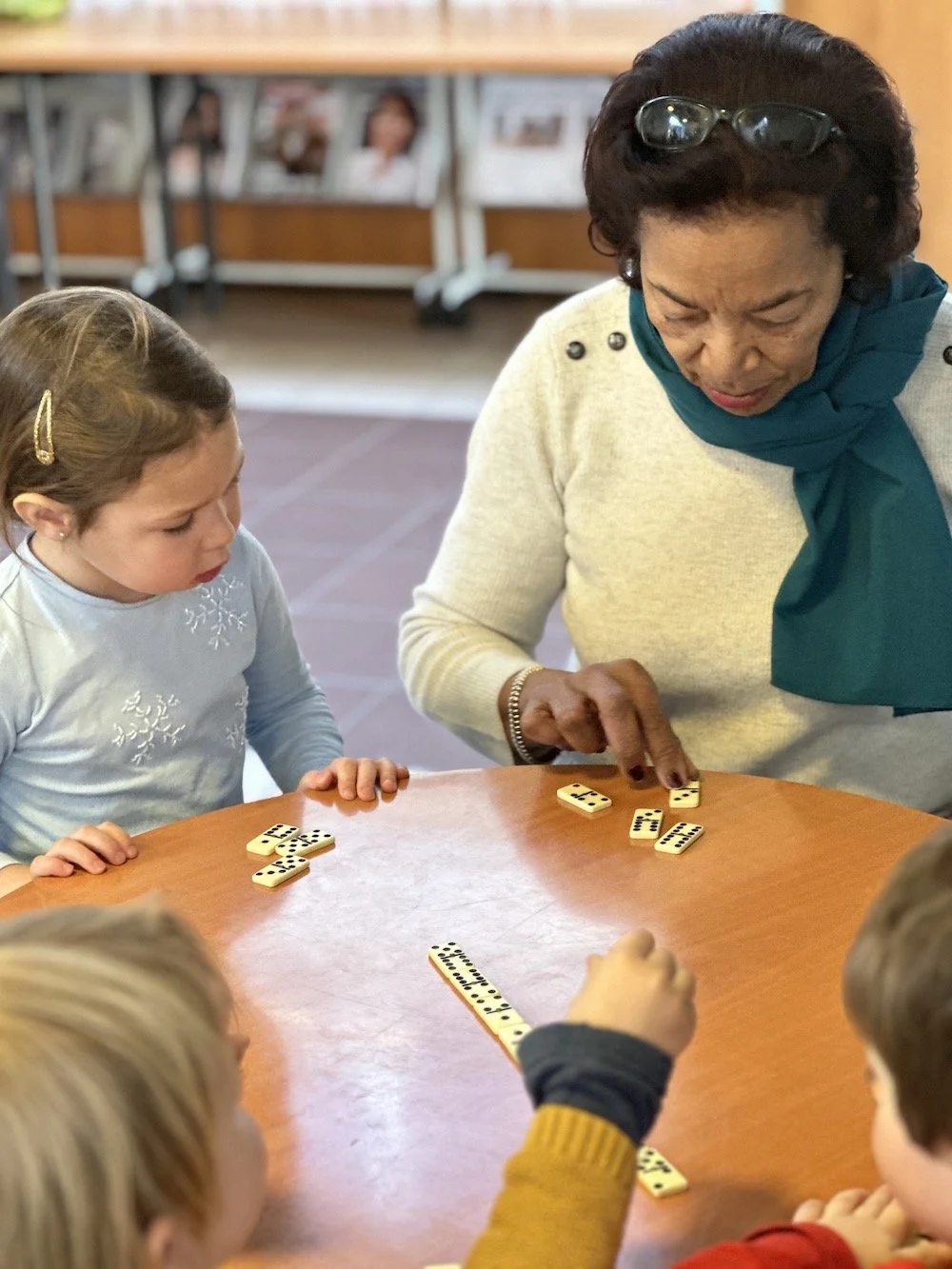
Raising a child is a complex and multidimensional undertaking that transcends the walls of school and home. Among the many factors that influence a child's development, intergenerational interaction stands out as a powerful catalyst for growth. At Montessori Happy Kids, we have established a partnership with the Lancy Senior Citizens' Activity Center (CAD) to offer our students these enriching interactions that will help shape well-rounded and socially competent individuals.
1. Informal teachings and transmitted wisdom
When children aged 3 to 6 interact with older people, they benefit from the wealth of experiences and knowledge that life has offered their elders. Grandparents, for example, can share stories from their own childhood, imparting informal lessons that cannot be found in any school textbook. These stories are not only life lessons, but also ways to preserve family and cultural memory.

2. Development of Social Skills
Intergenerational interaction provides a unique platform for developing crucial social skills in young children. Interactions with different generations teach tolerance, patience, and respect. Children learn to adapt their language and behavior to the context, thereby strengthening their social intelligence. They also develop an empathetic understanding of others, fostering deeper and more meaningful interpersonal relationships.
3. Promoting Family and Cultural History
Moments shared between generations create strong and lasting bonds with family and cultural history. Children discover their roots, understand family traditions, and develop a sense of belonging. This connection to the past helps strengthen a child's identity and cultivate a deep respect for cultural diversity.
4. Emotional Support and Stability
Intergenerational relationships provide children with a constant source of emotional support. Grandparents and other older members of their community can become stable figures in a child's life, offering a reassuring presence and emotional refuge in times of stress. This stability helps to strengthen children's emotional resilience and promote healthy emotional balance.

5. Expansion of the Linguistic Repertoire
Interacting with older generations exposes children to rich and diverse language. Expressions, anecdotes, and terminology specific to a given era enrich children's linguistic repertoire, thereby helping to improve their communication skills. It can also stimulate their interest in history, literature, and other forms of artistic expression.
6. Transmission of Practical and Artistic Skills
Intergenerational relationships are often a channel for the transmission of practical and artistic skills. Whether it's cooking, gardening, music, or crafts, children learn concrete skills while spending time with older people who are passionate about these activities. These practical skills contribute not only to the development of individual talents, but also to the overall development of the child.
7. Promoting Inclusion and Diversity
Interacting with people from different generations makes kids aware of diversity in many ways. They learn to appreciate intergenerational differences and understand that each generation makes a unique contribution to society. This awareness of diversity promotes inclusion and tolerance, which are essential skills in an increasingly interconnected world.
The benefits of intergenerational interaction for children are vast and profound. By facilitating ongoing exchange between generations, we foster an environment conducive to the intellectual, social, and emotional growth of young minds. It is imperative that educators, parents, and society as a whole recognize the invaluable worth of these intergenerational connections and work together to encourage them. By investing in the sharing of experiences between generations, we at Montessori Happy Kids are building a solid foundation for the holistic development of children, preparing them to become well-rounded and compassionate individuals in the future.